Share
Let’s face it: science doesn’t always make for the easiest bedtime reading. From protein sequencing pathways to CRISPR workflows, the language of scientific innovation can be a little… dense. But that doesn’t mean your message has to be. In fact, if you want to engage, inspire and drive action, storytelling could be your brand’s most powerful tool.
At kdm communications, we believe that great science deserves a great story – not because we’re chasing drama (although we’ll never say no to a cliffhanger), but because stories are how people make sense of the world. And in life sciences marketing – where complex ideas need to land with highly diverse audiences – the ability to simplify, humanise and connect is everything.
Why does storytelling matter in life sciences marketing?
In the life sciences and healthcare world, facts, figures, data and evidence will always matter – but stories are what bring them to life. A compelling narrative can:
- bridge the gap between technical detail and real-world relevance;
- transform a scientific breakthrough into something emotionally resonant;
- and help audiences to retain and recall complex ideas.
Consider this: would you rather read about a new gene therapy platform, or about the young patient whose life was transformed by it? We’re not suggesting that you abandon the science – far from it. But when you wrap data up in a narrative, people start to care. And when people care, it enhances connection and engagement.
How to simplify scientific concepts
Simplification isn’t about cutting corners; it’s about creating clarity. The best scientific stories distil complex ideas without compromising on accuracy. Here are a few storytelling tools that help:
-
- Use metaphors that resonate. Metaphors are an author’s best friend, taking technical concepts and mapping them onto something familiar. For instance, comparing CRISPR to ‘molecular scissors’ makes an abstract concept instantly more relatable – and memorable – to any audience.
- Put people at the centre. Whenever possible, shine a light on the human impact of your work. Patient perspectives, research journeys or examples of how your innovation solves real-world challenges can help to anchor your science in lived experiences.
- Show, don’t just tell. Sometimes, a picture really is worth a thousand words. Visual storytelling – through infographics, animations or even simple diagrams – can often explain what can’t easily be said. It also boosts retention, increases shareability and looks great across websites and social media.
Need help creating content that connects? Check out our content creation services and social media support.
How do case studies and testimonials build credibility?
In science, evidence is everything. Case studies and testimonials turn storytelling into something measurable and credible, showcasing your product, service or idea in action – with data, endorsements and outcomes as proof. Done well, they can:
- demonstrate value and ROI;
- build trust through peer-to-peer validation;
- and turn satisfied customers into advocates for your brand.
A strong testimonial is more than just a pat on the back – it’s a micro-story that shows prospective customers what success looks like. Case studies take this even further, walking audiences through the problem, the process and the results. Together, they build trust and show prospects exactly what working with you looks like.
How to write a compelling narrative
If you’re ready to weave more story into your science, here’s how to begin:
- Start with the why
Even the most technical breakthroughs begin with a need: a problem to solve, a patient to help or a better method to uncover. Anchor your story in this purpose, and let it guide the narrative from beginning to end.
- Introduce characters
Your tale may be rooted in science rather than fiction, but you can still introduce characters. Scientists, patients, clinicians or end users can all act as protagonists, helping to humanise complex ideas. Their goals, challenges and triumphs give your story shape, and can create a connection that facts and figures alone simply can’t achieve.
- Build momentum
Every great story has tension. What was the challenge, why was it difficult to overcome and how did your innovation change the outcome? By pacing your narrative and holding back the resolution, you create anticipation that keeps your audience engaged and invested in the journey.
- Balance fact with feeling
You want to connect with your readers, not manipulate them. Facts and data establish credibility, but emotion creates relatability. Don’t shy away from highlighting the human responses to your work – whether that’s relief, hope, curiosity or excitement – as this is often what makes your science memorable.
- Keep it accessible
If a non-specialist can’t follow your content, you’ve lost half your audience. Write clearly, avoid jargon where possible, and structure content so it’s easy to digest. Just because you can say ‘multiparametric flow cytometry assay’ doesn’t always mean you should.
How kdm helps you bring science to life
At kdm, we’re more than just marketers – we’re translators, storytellers and scientists at heart. Our team of PhD-level writers and creative content specialists helps life sciences organisations communicate their innovations with clarity, credibility and impact.
Whether it’s crafting thought leadership blogs, writing compelling case studies or building a full content strategy, we work with clients to uncover the story behind the science – and to make sure it gets heard. Explore our digital marketing and content creation services to see how we can support your next campaign.
The bottom line
Science tells us what. Storytelling tells us why it matters. Put them together, and you have content that builds credibility, captures attention and transforms curiosity into action. So, the next time you’re sharing a breakthrough, launching a product or publishing new research, ask yourself: ‘What’s the story here?’ Chances are, it’s one worth telling.

About the author – Jan Le Mière, MBiochem, Editor in Chief
Jan left the land of milk and potatoes – Jersey, in case you were wondering – to pursue a life in biochemistry and biotechnology. In fact, a career in science communications wasn’t at all what he was aiming for…
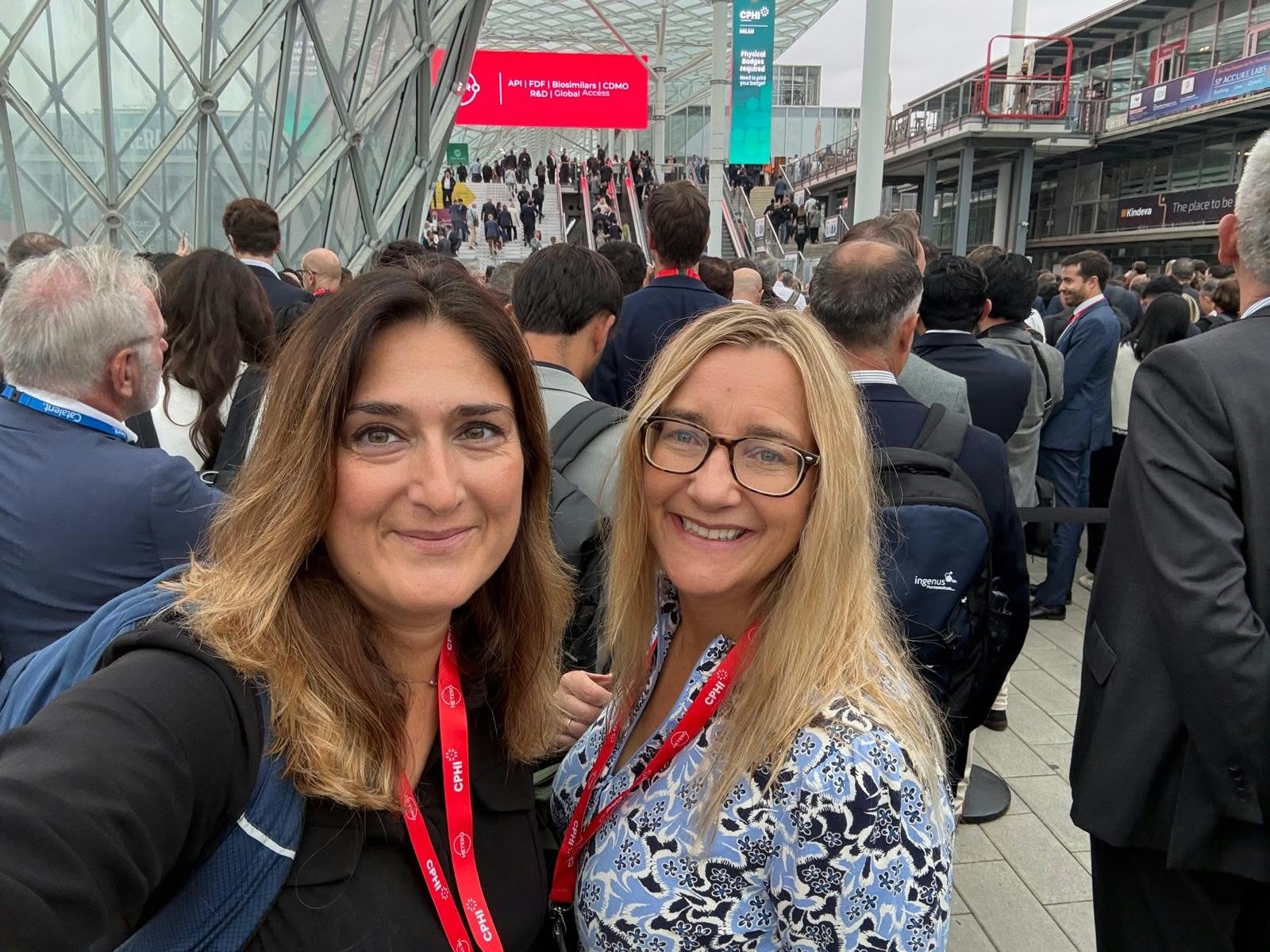
CPHI Europe 2026 in Milan certainly didn't disappoint! Annabel and I headed to the host city for two days of networking, reconnecting with familiar faces and meeting prospective clients from across the sector.


Exhibitions are a valuable opportunity for life sciences companies to meet customers, launch products, strengthen relationships and generate new leads.

An exhibition is one of the best opportunities in the calendar to build lasting thought leadership, positioning your subject matter experts – not just your products – as voices the industry turns to and listens to.

Too many white papers fail to capture attention, let alone drive meaningful engagement, but the problem isn't usually the quality of the science – it's how the white paper is conceived, written, structured and promoted.