Share
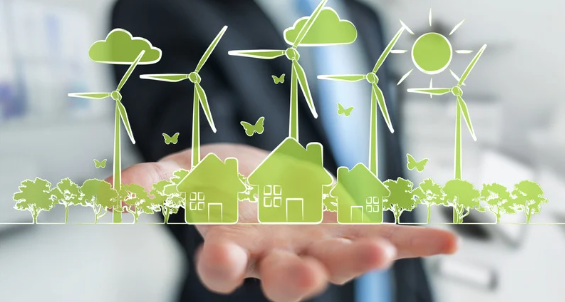
The renewable energy sector sits at the intersection of environmental urgency, technological innovation, and commercial opportunity. Companies in this space aren’t just selling products or services; they’re offering solutions to one of the defining challenges of our time. However, marketing renewable energy solutions to business audiences require more than appealing to good intentions.
Buyers (procurement teams, energy managers, CFOs and sustainability officers) need hard data, proven ROI and clear evidence that the solution delivers both environmental and business benefits. Effective marketing needs to balance purpose-driven messaging with pragmatic, results-focused communication.
What is clean energy marketing?
Clean energy marketing is the strategic promotion of renewable energy technologies, services and solutions to businesses, governments and other organisations. It encompasses everything from solar panels and wind turbines to energy storage systems, smart grid technologies and energy management software.
Unlike marketing renewable energy to consumers (B2C), which might emphasise environmental values or personal impact, B2B clean energy marketing must address complex decision criteria. Buyers want data relating to energy output, system reliability and payback periods, as well as detailed information on maintenance requirements, regulatory compliance and integration with existing infrastructure. Buyers are typically evaluating renewable energy against conventional alternatives, comparing suppliers and assessing long-term viability.
Clean energy marketing must therefore be technically credible, commercially compelling and strategically positioned. It needs to demonstrate that renewable solutions are economically smart as well as being environmentally sustainable, operationally reliable and aligned with broader business objectives.
Why clean energy marketing is essential for driving stakeholder engagement
The renewable energy sector faces unique communication challenges. The sector is experiencing huge growth, and technologies are rapidly evolving while regulatory frameworks – which already vary significantly by region – struggle to keep up with innovation. Together, these factors drive misconceptions about reliability, cost and performance.
Effective marketing addresses these challenges head-on. It educates stakeholders – who are often not technical experts – about what’s possible, provides data and case studies that build confidence, and makes complex technologies accessible to non-specialist decision-makers. Without strong marketing, even the best clean energy solutions struggle to gain traction.
Clean energy marketing also serves multiple stakeholder groups simultaneously. It helps investors to understand market opportunities and competitive positioning, provides customers with technical specifications and performance data, and informs regulators and policymakers about compliance and broader environmental impacts. Marketing that successfully engages all these audiences while maintaining consistent messaging is essential for growth.
The renewable energy sector is increasingly competitive. First-mover advantages are eroding as more companies enter the market, with differentiation based on technology alone becoming harder as solutions mature. Marketing is becoming the differentiator: how clearly value is communicated, how effectively trust is built, and how well the brand is positioned relative to competitors.
How to market clean energy effectively in B2B scenarios
Marketing renewable energy to business audiences requires a strategic, multi-faceted approach:
- Lead with business outcomes, not just environmental benefits. While sustainability credentials matter, most B2B buyers are primarily motivated by cost savings, energy security, operational efficiency and regulatory compliance. Frame your solutions in these terms first, with environmental benefits as a valuable additional outcome, rather than the sole selling point.
- Provide robust data and evidence. Technical buyers want specifics, backed by data: energy generation projections, system efficiency ratings, payback calculations, reliability metrics and maintenance requirements. Case studies can attract prospects and build confidence by demonstrating real-world performance, while modelling tools can help engaged buyers to assess outcomes for their specific situations.
- Address barriers and objections directly. Don’t ignore concerns about upfront costs, system reliability or integration challenges, instead tackle them head-on with evidence-based responses, risk mitigation strategies and transparent discussions around trade-offs. This approach builds trust far more effectively than ignoring issues or overselling benefits.
- Demonstrate expertise and thought leadership. Position your company as a knowledgeable guide through the complex renewable energy landscape. Publish insights on industry trends, regulatory changes and emerging technologies. Provide educational resources that help prospects to make informed decisions, even if they don’t immediately choose your solution.
- Use multiple content formats. Different stakeholders prefer different formats. CFOs might want detailed ROI calculators and financial models, operations managers want technical specifications and installation guides, and sustainability officers need compliance documentation and environmental impact reports. Create content that serves each audience’s specific needs.
- Leverage customer success stories. Prospective buyers want to see proof that your solution works in environments similar to theirs. Develop detailed case studies showcasing installations in relevant sectors, highlighting both quantitative outcomes (energy savings, payback periods) and qualitative benefits (reduced maintenance, improved energy independence).
- Build credibility through partnerships and certifications. Highlight relevant industry certifications, partnerships with established players and endorsements from respected organisations. In a sector where trust is paramount, third-party validation significantly strengthens your positioning.
- Optimise for search and digital discoverability. B2B buyers increasingly start their research online. Ensure your website ranks well for relevant search terms. Create content that answers the questions prospects are actually asking, and make these technical resources easy to find and download.
How kdm can help
Marketing renewable energy solutions effectively requires both technical understanding and strategic communication expertise. Many clean energy companies excel at innovation, but lack the internal resources to market their solutions as compellingly as they deserve.
At kdm communications, we specialise in marketing for the technology sector. While our core expertise is in life sciences, we are comfortable navigating renewable energy and similar complex B2B markets, and have significant technical expertise on our staff.
We offer comprehensive content creation services, from technical blogs and white papers to case studies and video content. Our technical writing team can translate complex technologies into clear, compelling content that engages business decision-makers without oversimplifying or sacrificing accuracy.
We also provide strategic marketing planning to help you identify the right messages, channels and content formats for your specific audience. Whether you need support with the entire marketing programme, or just specific elements, we can help you to communicate sustainability and drive meaningful B2B engagement.
The transition to renewable energy represents one of the biggest business opportunities of our time. Effective marketing ensures your solutions get the attention and adoption they deserve.

You spent weeks creating it, putting your heart and soul – and years of expertise – into every section. The data is solid, the science is sound and the design looks professional. You gate it on your website, promote it across your channels and wait for the leads to roll in – and then they don’t.
Conferences and trade shows represent significant investments for life sciences companies. Between booth costs, sponsorships, staff time, travel expenses and promotional materials, a single major event can consume a substantial portion of your annual marketing budget. Yet when leadership asks ‘Was it worth it?’, many marketing teams struggle to provide a satisfying answer. The challenge

On 29th of April 2026, the life sciences world lost one of its most compelling figures.was genomics pioneer who famously raced against the US government to sequence the human genome. He then went on to become one of the founders of synthetic biology and was, by almost any measure, a scientist who changed what the world
Influencer marketing in technical sectors operates under constraints that consumer influencer campaigns never face. Simply tracking likes and shares is not enough in the life sciences, diagnostics, healthcare and medical devices industries. You need to demonstrate genuine business impact and added value, while navigating complex scientific products, services, markets and lengthy sales cycles.